
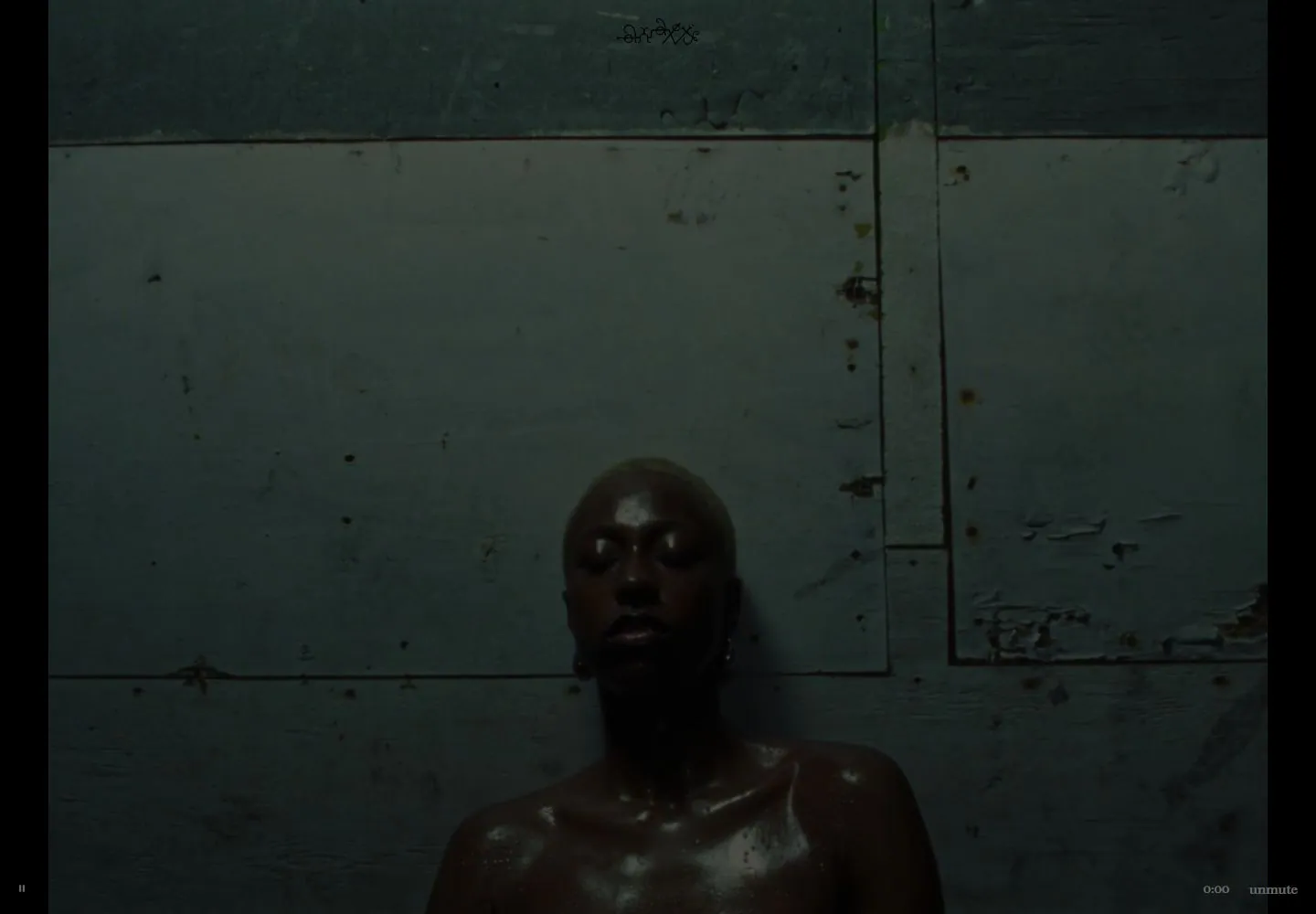
Live capture at 1440px, 2026-10-25
How it’s built
- Layout
- A dark cinematic photographic-looking portrait scene fills the frame, with minimal white player-like marks and tiny time labels along the lower edge.
- Type
- Tiny white utility labels.
- Color and surface
- Dark green-black scene and white controls.
- Components
- A dark full-field portrait scene carries minimal player-like marks along the lower edge.
What makes it work
- Dark cinematic photographic-looking scene
- Sparse white player-like marks and time labels at bottom
On a new subjectFor a public oral-history archive, use an original dark cinematic portrait scene with sparse white player-like marks and time labels at the bottom.
Measured
Fonts loadedgeographica, headline-gothic-atf
Body text16px
Page background#000000
Text color#000000
Page height1,000px
Computed CSS at 1440px, 2026-10-25.
Live behavior
- Today
- The desktop opening is dominated by a close portrait against weathered pale teal boards, with black vertical gutters. The portrait subject sits low in the frame. On the tablet capture, the same imagery is centered between large black horizontal bands, with a small white canvas wordmark at the top. The phone capture stacks a dark field of scattered letters above a high-contrast portrait, followed by the visible start of a red block.
- Responsive
- The desktop frame fills a 1440×1000 viewport with the portrait and narrow side gutters. At 768×1024 the portrait occupies the middle band between black regions; at 390×844 the letter field and portrait become vertically stacked full-width regions, with the next red section beginning at the lower edge. The phone measurement reports a 12,457px document and actual scrollY 0, so the screenshot shows only its opening viewport.
- Scroll
- The desktop scroll-labeled capture reports actual scrollY 0 and remains on the portrait opening; its changed frame includes the media controls. The tablet and phone captures also start at scrollY 0. No lower section or scroll-triggered transition was inspected.


